Some mobile networks have spam protection that’s enabled automatically.
You could also have a “clean” number, especially if you don’t use your phone number anywhere online, haven’t answered a spam call before, and nobody used it before you (or the previous user was a long time ago).
Spam callers can’t robodial literally every number, so they rely on lists of phone numbers that are known to be good/active, for example if they’ve answered a spam call before, if the number has been in a data leak, etc.
Older people do this a lot. Either their full name, or “Lastname residence”
The scary thing these days is that someone needs just a few samples of your voice to be able to clone it using AI. I suspect that scammers will do that, if they’re not already doing it. We’re going to get to a point where we can’t trust people are who they say they are.


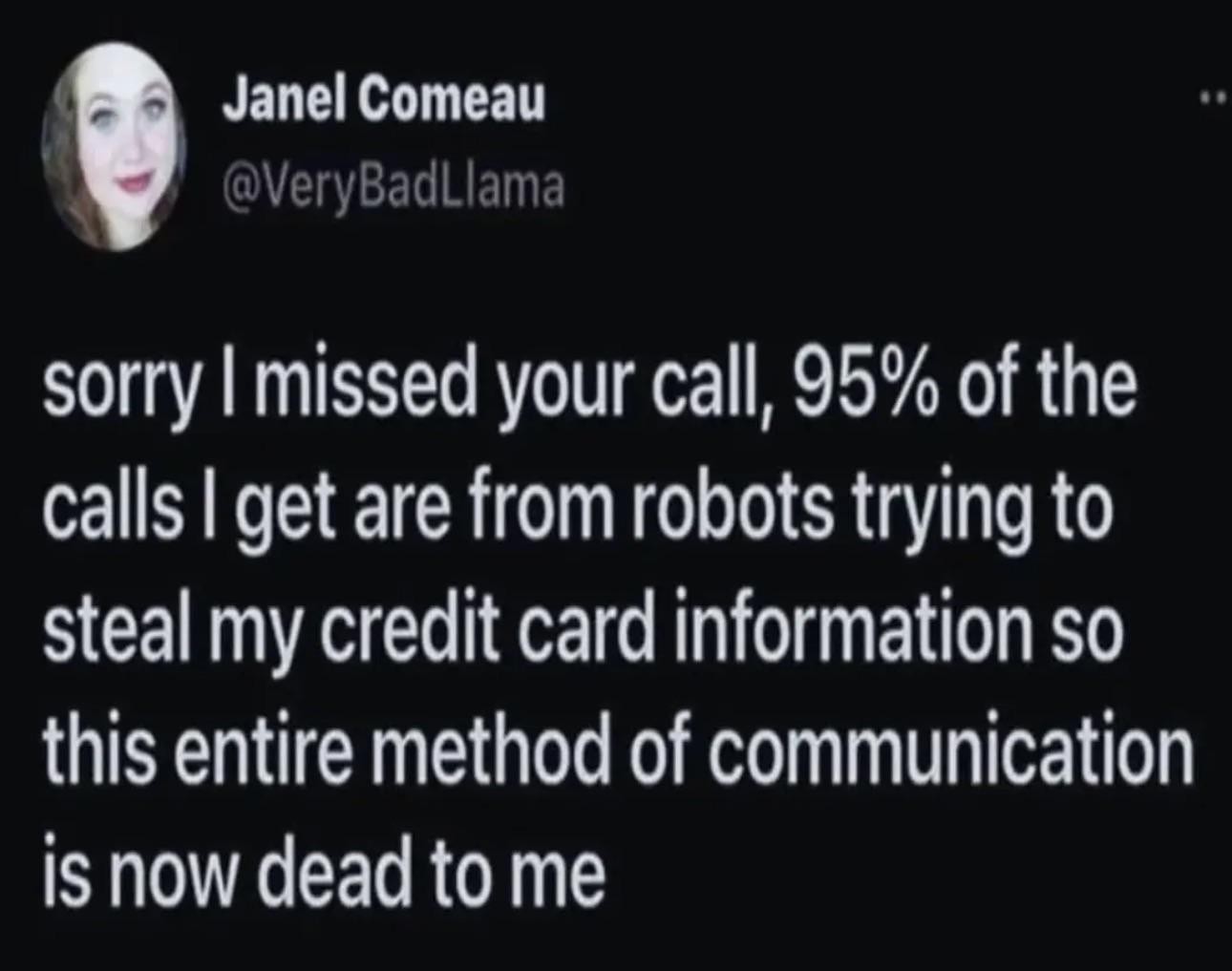
Some mobile networks have spam protection that’s enabled automatically.
You could also have a “clean” number, especially if you don’t use your phone number anywhere online, haven’t answered a spam call before, and nobody used it before you (or the previous user was a long time ago).
Spam callers can’t robodial literally every number, so they rely on lists of phone numbers that are known to be good/active, for example if they’ve answered a spam call before, if the number has been in a data leak, etc.
I don’t know if this is still accurate, but I have a friend who used to answer calls from unknown numbers with “hello, this is First name Lastname.”
I don’t even answer calls from unknown numbers. His approach boggled my mind, in part because of what you just said.
Older people do this a lot. Either their full name, or “Lastname residence”
The scary thing these days is that someone needs just a few samples of your voice to be able to clone it using AI. I suspect that scammers will do that, if they’re not already doing it. We’re going to get to a point where we can’t trust people are who they say they are.