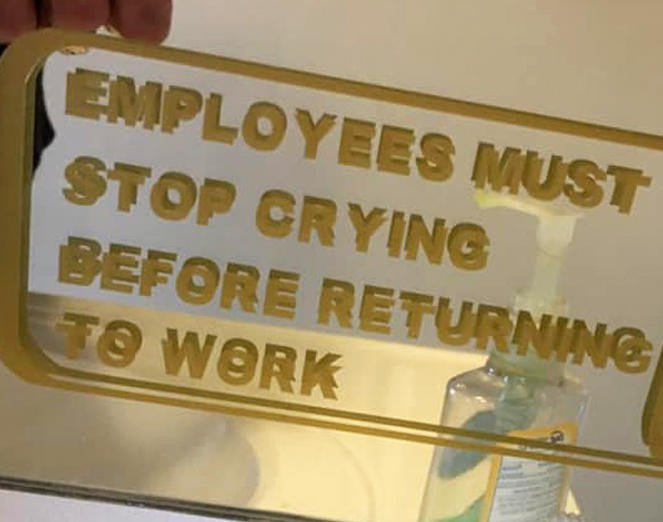
Sanitation rules!

Professional shitposter and amateur historian.

  • 3 Posts
  • 29 Comments
Joined 1 year ago
cake
Cake day: August 12th, 2025

help-circle

  • I’m not saying this happening is okay, but the lack of context about the volume can be misleading. Rules are different in Manitoba but in Ontario plants need to notify the public when there is a spill, which is why I imagine it’s made the news before any details are available. The idea is to inform downstream water users as soon as possible.

    10 millions litres is 5% of average daily flow. It’s a very small amount, and the pollition load would be similar to a few days of totally treated sewage.

    This article has a bit more info on what happened: https://www.cbc.ca/news/canada/manitoba/winnipeg-sewage-spill-treatment-plant-9.7407843

    Two automated bypass gates at the North End sewage treatment plant opened unexpectedly at about 1:10 a.m., … “We are still investigating why the gates opened and why the first alarm did not go off.”

    I want to be clear I’m not criticising anyone. The fact that they caught it so quickly is honestly amazing. I’ve seen similar issues (that didn’t involve a spill to the environment) go undetected for like, months, because someone assumed the instrument was faulty and didn’t bother to verify.






  • Yeah so that exists and it’s not going so well for the UK. I will edit with some links.

    Edit:

    Very broadly water utilities in the UK and north America largely started off private but public ownership is still the norm for centralized system of idk > 100 people?

    Tbh I’m high and not bothering to look stuff but but I’m guessing that it was sewage treatment which lead water utilities (handling both potable and sewage) being public. You can charge people for water, but unless the government is forcing people to connect to a sewer and get rid of pit latrines etc there is no market for it. (Fun fact domestic connections to sewers predate the widespread use of septic tanks)

    Migration to urban centres due to industrialization and the industrial processes themselves were the main loading of sewage, which overwhelmed natural systems that had previously been able to support the community.

    Someone had to treat the sewage because it was fucking up the drinking water. Who has to deal with stuff like that? The government! So they run the sewage plants. And because the private drinking water plants were run for profit and not for health, a lot of them were extremely bad they got shut down. Once again, the government had to step in because they needed to enforce standards.

    Toronto and Ottawa have very interesting and very divergent experiences with that relationship. If someone is interested I can see if I can dig up an article someone wrote about it.

    Anyways, sometimes the government made developers pay directly for the construction, operations and maintenance of a plant, but now in Ontario for the most part they just charge development fees. Small communities like trailer parks or ski villages typically have their own little plant or over glorified septic tank.

    I came here to argue that there are in fact private sewage companies and they are often disasters, but I think the above kind of proved that the origin of public water utilities was the failure of the private sector to get their shit together.

    Well that’s awkward.

    Anyways, fuck Thames Water : https://en.wikipedia.org/wiki/Thames_Water


  • The new order comes amid several reported cyberattacks on U.S. water systems, which officials suspect have links to Iran, according to The New York Times.

    I know the article isn’t saying it’s the same, but I wanted to add a clarification that the FBI had said the attacks were only noted in Rockwell Automation/Allen-Bradley Programmable Logic Controllers (PLCs), specifically MicroLogix 1100 and 1400 series.

    After remotely accessing internet-facing devices, the actors changed the IP addresses and passwords, resulting in a loss of monitoring and control functionality.

    There have been PLC attacks that resulted from a compromised device being installed but these appear to be about poor security practices.

    Someone is in TROUBLE:

    At least one organization reported modified PLC project files after noticing ladder logic discrepancies across several sites.

    There is literally a physical key you have to turn to change the program. For example:


  • Hold on… A few things stand out to me.

    Why do you think they want people to buy energy? (Regulated)Hydro companies always want people to conserve electricity because it means they don’t need to be constantly upgrading the transmission grid.

    Secondly, what would they be diverting water to? Who is they? Hydro may physically control the dams and valves but if you are saying the water needs to go to the data centre when the water is going to come from Metro Van water department, in which case the city does get a say because development is only approved if there is enough capacity. If the data centre is using a lot of water, so much so that it will impact HydroBC in terms of lower reservoirs, it’s going to be a massive demand in the city run water service.

    If you have questions about how these things are controlled I’d be happy to help answer them using the public documents from these utilities.


  • Electricity was stupid expensive in the 90s in Ontario so it made sense to invest in cogeneration engines to burn digester gas or even natural gas and use the electricity on site. Then electricity got cheaper so it still made sense to burn biogas generated on site to lower your peak demands especially if you were paying time of use or you were Class A and needed to do load shedding. Sometimes you’d even get a discount from the electricity company for running your systems because it meant they could delay increasing the grid.

    Now, the financial incentive is for carbon credits. You don’t get those if you burn on site, you just get to buy less taxed fuels. If you instead upgrade the gas to renewable natural gas (like what is described in the article) and put that in the natural gas grid, you can sell the carbon credits to companies who are required to offset their own generation. I think that is where the money is in these schemes.

    (That and the tipping costs for food waste, free slowly digesting material to regulate the digesters in the form of the manure, outsourcing the annoying regulatory bits to the farmers, and building goodwill for green data centres)


  • I promise this isn’t just a well askually but anaerobic digestion (what is being discussed in the article) and composting are different.

    Composting requires oxygen. It produces carbon dioxide. It produces heat. Compost has less restrictions for use as a fertilizer than digested mature. I’m not from the US so I don’t want to assume it’s the same across all states but in Canada you can sell it to the public.

    Anaerobic Digesters do not require oxygen. It produces carbon dioxide and methane. It requires heat input to occur at a reasonable rate. Use as a fertilizer is restricted because more pathogens survive. Hydrogen sulphide is produced so sometimes ferric chloride is added, and that reduces the amount of phosphorus available to plants.

    One of the trade offs with digestion is that processing the digestate into something usable takes additional energy. If it’s a single farm and they are not taking additional feedstock it’s no more nutrients that they had before they started digesting. Chances are they can manage the nutrients on site and don’t need to input energy.

    If they are taking stuff from off-site, or if they expended their operation beyond what they can manage on site then they need to choose if they are going to transport it off-site as a liquid, thicken it into cake (mmmmm), or create a fertilizer product like pellets. Each option requires more energy than the last. They may be able to sell the pellets but typically have to give liquid or cake away for free or pay people to take it.


  • The operation, run by Pennsylvania-based Ag-Grid Energy, is the first of its kind in the country. The company claims the anaerobic digestion of manure and food waste could be a game-changer, not only in powering crypto, but data centers, which currently use 4.9% of the country’s electricity, a figure that could double by 2030.

    There are a handful of net energy producing waste treatment processes in the world, and they all achieve it by taking advantage of hyper local opportunities to optimize. They are not infinitely scalable. For example, T. PARK in China takes sludge from several wastewater plants and uses the energy to power one of them.

    Further, it is not truly net positive if it leaves residuals that need further treatment.

    The project claims to recycle more than 45,000 gallons of food waste per day and the manure of 4,000 cows. “What we want to do is also provide, if possible through fiber optics, [the] value of the AI computing capacity to that same regional area,” Akki says.

    The energy isn’t in the manure. Wastewater plants use food waste (co-digestion) to boost methane production of digesters. Some places get the food waste from a municipal green bin program but that’s a giant pain and wastewater plants tend to prefer food waste from food manufacturing. So it’s unclear if this is diverting the food waste from landfill. The best solution would be to reduce the food waste in the first place. Can you call it green if it is the result of over production?

    Don’t get me wrong, I am pro-biogas. In municipal wastewater treatment the best results for biogas production come when you direct as much short chain carbon to the digester, which greatly reduces one of the highest electrical loads on the plant (blowers to oxidize carbon).

    You’re still burning it though. It looks good on paper because the CO2 emissions don’t count in Canadian GHG reporting because the source is biogenic. Doesn’t change the fact that there are emissions.

    The digested waste, or digestate, is meant to be recycled, potentially into a range of products, such as fertilizer and animal bedding.

    The energy to turn digestate into a fertilize product is pretty massive. Many of the plants that are energy neutral incinerate and the ash is landfilled.

    Digested manure can be more polluting than manure that hasn’t been digested, according to USDA research.

    Eeeehhhhh… Technically true but only because people are allowed to operate digesters poorly. I was talking to an engineer in the states who told me his digester was losing 30% of the methane by leaks and I was sitting getting second hand panic but apparently that’s not super illegal? We would have problems with the environmental regulators and the TSSA.

    The project intended to send about 41,000 gallons of waste per day into a tributary of Walla Walla Creek, which empties into Lake Michigan.

    Excuse me what

    There are some high level engineering plans available.

    Some highlights:

    • daily food waste estimated to be 225 tonnes and it may require on site processing.
    • less than half of the digester feed will be manure.
    • Digesters are mesophilic meaning they need to be heated to and maintained at ~35 C
    • heat for the digester is provided by burning fuel oil 🙃 (most municipal plants burn the biogas)
    • gas upgrading is by chilling, filtering and compressing for transport via pipeline. No mention of energy demands.
    • the project would add runoff capture for manure storage which didn’t exist before.
    • the manure needs to be pretreated before digestion to remove sand
    • the project agreement means Vanguard is not responsible for the waste products after the gas is removed.
    • the project will create waste with more nutrients than the farm can land apply on their site. (You know, due to the additional food waste). There are therefore no details about what the plan is for the digestate.
    • based on a news article it sounded like they wanted to build a pipeline to transport it to other farms for land application. That might be where the waste to the creek idea came from? The pipeline was to go under the creek. Maybe that was just if it broke?
    • the enclosed engineering drawings are civil/structural only, no indication of power demand or fuel consumption.

    There is also an air pollution permit application available. Additional details about the project include

    • two 750 kw emergency generators (diesel powered)
    • two natural gas boilers at 4 MMBTU/hr (unclear if this is instead of the fuel oil in the other doc?)
    • the pressure relief system was to have a flare, which is positive. It is better to flare gas in an energy versus just venting.

    The nutrient management permit application is behind a log in so I can’t see it but this article has statements from Vanguard that contradict the engineering plans.

    Hanselman says the company never uses human waste in its digesters, which is how PFAS would enter the equation and that the sources of the other organic food waste would likely be byproducts from dairy processing and beer brewing.

    The application included provisions for accepting packaged food. The packaging is where the pfas is.

    The process Vanguard’s co-digesters use to clean the digestate on the back end, Hanselman says, allows for nutrients to be removed and taken away. That allows the farm to limit the amount of phosphorus and nitrogen that is spread on the farm’s land. He noted that at the company’s first project in Vermont, they’re removing 12 tons of phosphorus per day from the environment.

    This is explicitly untrue for the Waupaca project? Vanguard has no part in digestate treatment. Sometimes there is phosphorus removal during H2S removal (if FeCl is used) but this project used a scrubber. So no nutrient reduction.

    I obviously can’t speak for every project, but this example project would increase the amount of nutrients the farm has to manage (because of the trucked in food waste). It would increase energy consumption, and there was no plan for what to do with the digestate. It’s not even clear if there is a net methane release reduction over their previous methods because the carbon in the food is more likely to convert to methane in the digester. The more slow to break down carbon from the manure may still end up on fields.

    Food waste digestion needs a less biodegradable feed stock to make the process more stable. In municipal wastewater you balance raw sludge (easily digestible) and secondary sludge (less easily digestible) to ensure the acetogenisis step doesn’t poison the methanogens step.

    I don’t see a benefit to the local community in this proposal at all. If they treated the wastewater using energy efficient methods then maybe? But not this project as it was proposed. Vanguard gets the slowly biodegradable material, land to use, to be absolved of responsibility to deal with byproducts. Seems like a bad deal.


  • I don’t agree with that take.

    https://duckduckgo.com/duckduckgo-help-pages/results/how-to-filter-out-ai-images-in-duckduckgo-search-results

    We rely on publicly available lists to filter out AI-generated content, like those provided by uBlockOrigin & uBlacklist Huge AI Blocklist, an open-source blocklist, manually curated by project contributors.

    This is an open source block list, which is manually put together by volunteers. It’s not even reading metadata, presumably because that’s too resource intensive (or proprietary/unreliable).

    Gemini was able to tell that was AI because it was able to read the image ID water mark and associated it with how Adobe sequences AI generated images. The image ID is in the file name, but if we wanted to catch it that way the filter would need to work on logic, not just keywords or site lists. Programming a filter to search the file names to identify if it belonged to the sequence would be more complex.

    Alternatively, if you clicked though to the image you are immediately told if it is AI. Whenever I search for microbe photos I always click the source to determine if it’s a render or a stylized electron microscope capture, and I figure it’s always been good practice to get the image from the source to verify it’s not totally bullshit either in terms of the the search pulling up something unrelated or the image itself being misleading or even a humorous misrepresentation/meme.

    I think it’s important to understand how the tools we rely on work.


  • Ironically, AI can tell me the adobe images are AI and why they don’t get flagged in image search:

    Yes, this image is AI-generated.

    While checking the image file shows it was not made using Google AI tools specifically, it bears the official “Adobe Stock” watermark directly over an image ID (961863094) that belongs to Adobe’s generative AI collection.

    When downloaded directly from the official Adobe Stock platform, the full-resolution file contains embedded metadata acknowledging it as AI content, but this background data is lost when saving or extracting the preview image.