
1·
3 days agoOr there was less occasion for a term for this particular kind of bad? Correlation, causation, etc.
Or there was less occasion for a term for this particular kind of bad? Correlation, causation, etc.
I’m tempted to lower the banhammer just for the dancing-banana icon alone.
Here’s an example from an 1897 book review I found in the google books corpus: “There never was anything in all this world quite so provincial as American literature. When we over here are not reading slop we read the books that bear the approval of London.” Or this doggerel from the October 1920 issue of Farm Journal: “I read all kinds of printed junk / the good, the noble and the punk / the ancient and the new / and men who see me reading slop / predict that if I do not stop / my head will go askew.”
These both seem like wiktionary’s current sense 8 (“Content or entertainment which is worthless, or produced and consumed mindlessly”), so I don’t see any need to credit 4chan or 21st-century anti-Semites in general.
https://languagelog.ldc.upenn.edu/nll/?p=73708#comment-1642217
Right then. Off you go.
OK, rape as punishment is not a cool idea, nor is it a funny joke.
“Lol dorkus” is an idiomatic translation of Quod gratis asseritur, gratis negatur (more literally “What is freely asserted is freely denied”), and if you call that “Hitchens’s razor” I will fucking cut you.
yeah it like. infuriates me that “fully automated luxury communism” was named in a way to specifically pay homage to the past. the word “communism” itself is some sort of vicious traditionalism that refuses to create new things
https://bsky.app/profile/segyges.bsky.social/post/3my3letkpbc2b
Lol dorkus
It’s “fully automated luxury gay space communism”, and every adjective is a pithy critique of the past.
Ah yes, Nazis, well known for using slop jar to mean the vessel into which chamber pots are poured, in 1855
People will start creating things like Windows with LLM.
No, they won’t.
and Elon Musk said this flat out on Joe Rogan
lol
I saw a millionaire call the rebuilding of the Electrical Grid that’s taking place a modern day Industrial Revolution.
lol encore
Here you go, the full scoop, you won’t hear on the news.
lol a third time
Go do your own research somewhere else.
Previously posted here: https://awful.systems/post/10025000
I DO NOT LIKE THESE ROBOTS by Becky Chambers
Tao is on fedi; a polite (because this is professional business) reply on Masto pointing out relevant earlier research would probably benefit the community discussions.
Writing fiction and expository material to build emotional stability while looking for the next thing to do.
Not the most encouraging answer, I know, but so it goes.
I’ve been squeezed out of physics academia after years of ordinary career pressure and obstacles that aren’t very interesting or pertinent to this thread. The fact that the insitutions and the community have no resistance to slop, that’s why I’m not even trying to go back.
After the paper was written, the author learned that the same result was also proved independently and by a different method by Ningyi Li [7]. The result is also contained in a paper [8] released by OpenAI on October 6, 2026, in which the proof strategy and specific choices of notation are identical to a preliminary version of the present paper that was uploaded to ChatGPT on September 8, 2026.
Happy cake day!
There’s apparently an “Association for Human Mathematics” that has released the following statement:
Yesterday, on October 6th, 2026, OpenAI – which is currently defending lawsuits against accusations of illegal plagiarism, copyright infringement, and trademark dilution – released a repository of manuscripts purporting to contain solutions to a number of high-profile problems in mathematics.
Mathematicians did not ask for this work to be done. The Advisory Group on Mathematics and Artificial Intelligence, from whom OpenAI has claimed to derive its legitimacy, opened their initial advisory statement by saying that frontier AI corporations should not test advanced mathematical problems on internal models. In ignoring the central premise of the Advisory Group’s position, OpenAI has indicated total disregard for the norms of scientific research — norms that guarantee that mathematics remains trustworthy, ethically researched, and in the public interest.
Mathematicians have a particular vision of progress that is informed by history and field-specific considerations. We reject OpenAI’s assertion that this release advances our subject, and we urge mathematicians and the public to view the value of this publication model with due skepticism.
Releasing over 700 files at once is not a demonstration of scholarship, but a demonstration of power. We urge mathematicians to discontinue their work with OpenAI and to return to a vision of science that centers human understanding.
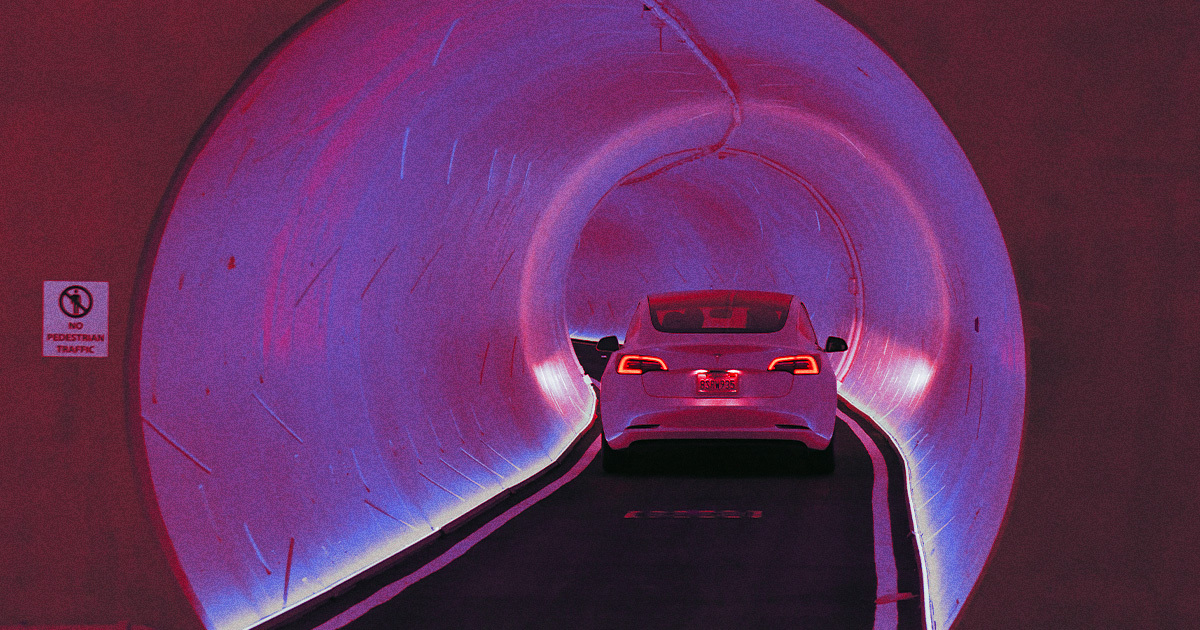
“A type III super-civilization can harness the energy output of an entire galaxy, and all the inhabitants stare at you like sleep paralysis demons, except for Bob, and we don’t want to get into what Bob’s deal is”
https://mastodon.social/@sundogplanets/117475880503916662