

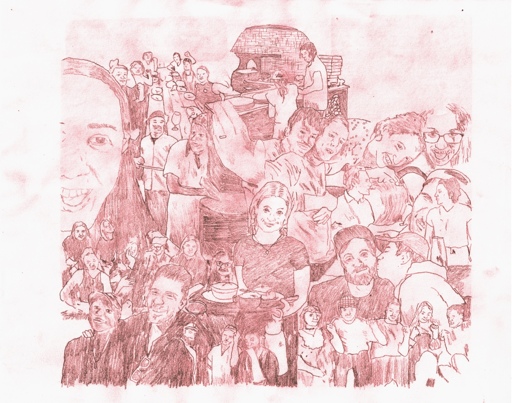
Across industries, sectors, and geographies even the best organized unions struggle to stop owners from closing up shop. If the owners decide they’re done – if they can afford to decide they’re done – workers can’t force them to stay. The reverse is also true, however: when owners invest a whole bunch of capital in an enterprise, this gives workers a window of opportunity to organize themselves before the bosses make their investment back. So it was at Barboncino.
But here’s the trouble: The clock is ticking, and you make your first move; then, you wait. You have to wait because you need to see what the boss is going to do – or, rather, you need what the boss is going to do to be seen. Maybe you know what the boss is going to do because this isn’t your first campaign, and you know that it doesn’t matter what kind of person the boss is, or where they went to school, or how they address you, but that they are going to be compelled to act in certain ways by forces greater than themselves to protect their business and their reputation. Maybe you know this, but your coworkers don’t, or don’t believe it, or don’t want to believe it. Maybe they just want to see it for themselves. Fair enough. But this means you have to wait. And wait. And the clock is still ticking. And you’re still waiting. Maybe the boss makes their move, you respond – and you’re back to waiting. Who, now, is really in control? Who is setting the tempo?
Every union drive, every organizing campaign, every workplace struggle, formal and informal, is, on some level, about time. A demand for more of a voice on the job is a demand for a greater say in the ends to which one’s time is put. Clock in and your time is no longer your own; clock out and you are, once again, on your own time. It is no coincidence that the new bosses’ first reforms at Barboncino were to change how scheduling worked and to effectively prohibit people from hanging out at the bar for too long after they got off their shifts.
For the Barbs union, then, the time spent waiting for the bosses to respond was not only time lost against the ticking clock but time that was actively given back because we did not claim it for ourselves. “There were a series of crises that were basically management’s fault,” one core organizer, Michael Kemmett, recalled to me. “And then the ones that followed were [from] our own mismanagement of our response.” Every day spent waiting to hear what Jesse and Emma were going to say or do made them appear to be, once again, the prime mover in workers’ lives at exactly the moment when the opposite should have been true.